Is It Safe To Take A Taxi In Fiji?
A plain look at taxi safety in Fiji around Nadi Airport: the official rules that govern airport taxis, how enforcement works, and what a pre-booked airport transfer lists for peace of mind.
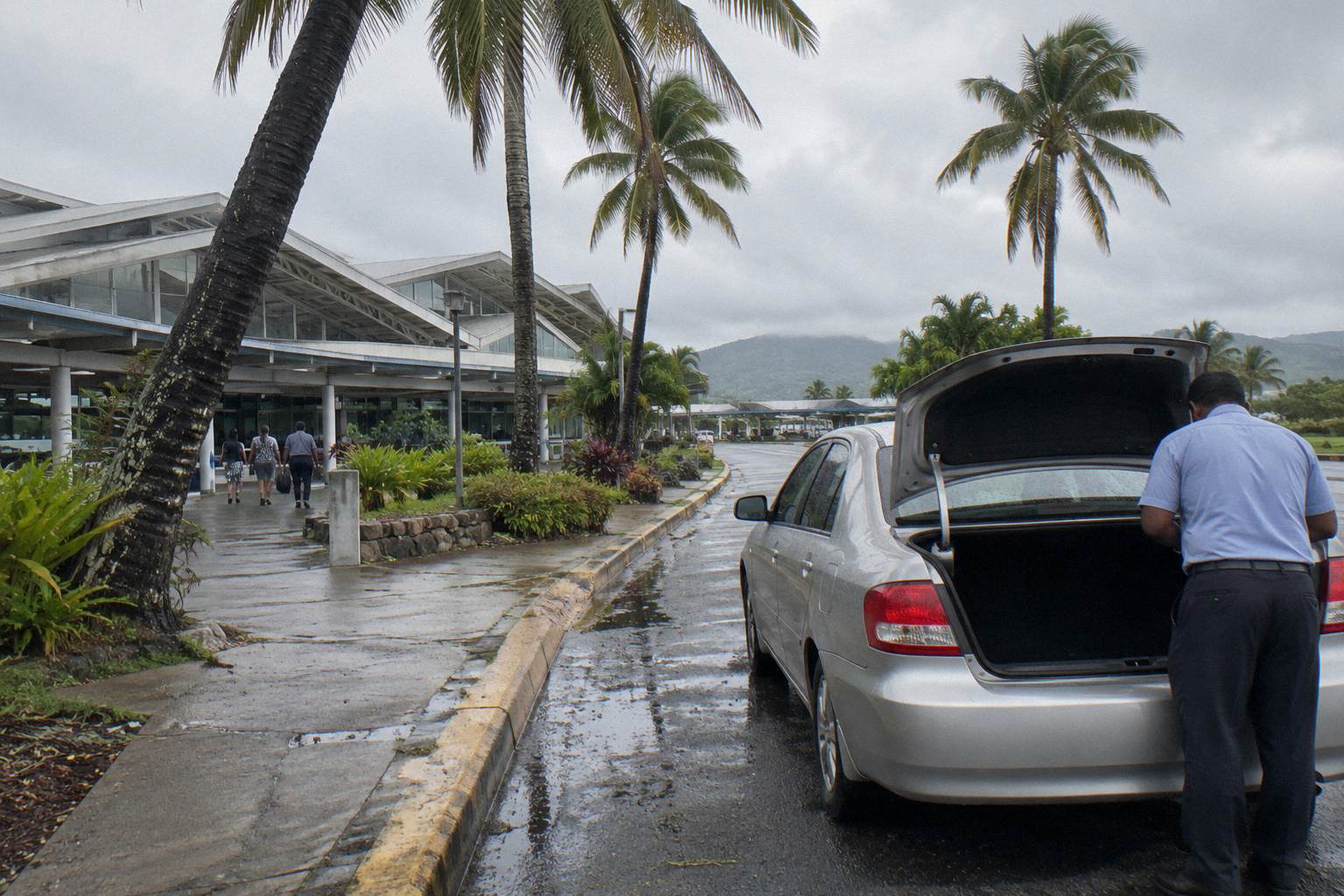
The official record gives a regulated picture rather than a risky one: Nadi Airport taxis are owned by individual proprietors operating with the approval of Airports Fiji Limited, meters are mandatory for every journey out of the terminal, and the land transport authority actively polices illegal public service vehicles. No verified safety statistics exist for Fijian taxis, so the honest answer rests on that regulatory framework and on the choices a passenger controls, such as pre-booking a named driver instead of arranging a ride on the spot after a long flight.

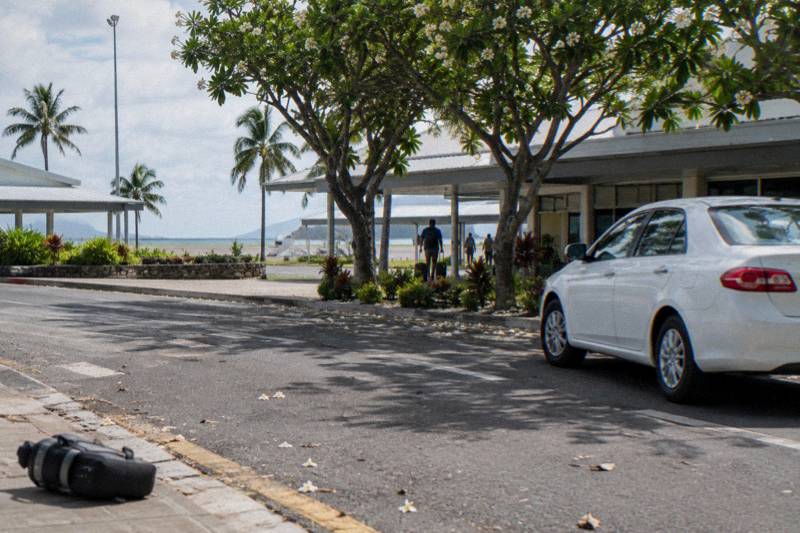
The question deserves a precise answer, and precision starts with what the official sources actually say. Airports Fiji's taxi page describes the taxis at Nadi International Airport as owned and operated by individual proprietors with the approval of Airports Fiji Limited, and it makes meter use mandatory for all journeys. The same page lists a starting flag fall of FJ$5 for any journey out of the airport. That is a licensed, metered system at the point where nearly every visitor first meets a Fijian road, which is a different situation from hailing an unmarked car on a highway somewhere.
Enforcement backs the licensing rule. Fiji's Land Transport Authority states that it "will continue to strengthen enforcement operations against illegal PSV operations", PSV meaning public service vehicle, the licence class that covers taxis and coaches. An enforcement body that publicly commits to cracking down on unlicensed operators is part of the safety picture, because the main risk in any taxi market anywhere is the unlicensed fringe, not the licensed core.
It helps to separate the two worries that sit inside this question. The first is structural: is the system governed, licensed and accountable? On that, the official record is clear and affirmative, with a named airport authority approving the fleet and a national transport authority policing the fringe. The second is personal: will the specific driver, vehicle and fare treatment on the day be straightforward? No published statistic answers that for any country, and Fiji publishes none. What a passenger can do is choose the arrangement that removes the most unknowns in advance, and that is where the pre-booked options earn their place in this discussion.
For a traveller who would rather remove the negotiation entirely, a pre-booked option exists at the airport: the Xplore private transfer from Nadi Airport to any hotel is listed from US$9.06 per person, rated 4.9 across 678 reviews, with meet and greet in the arrivals hall, a driver holding a name board, a free baby seat on request and free cancellation for a full refund, with the exact cut-off shown on the booking panel. Check availability
Are Nadi Airport Taxis Properly Regulated?
Yes, in the sense that a named authority governs them and publishes the rules: the cabs at the terminal are proprietor-owned with Airports Fiji approval, meters are required on every journey, and complaints have a defined destination, Airports Fiji customer services. Regulation of an airport taxi fleet is the strongest signal available, given that no official safety statistics for Fijian taxis have been published to lean on instead.
- Xplore Private, Airport To Hotel$9.06
- Private Departure Transfer To Nadi Airport From Your Hotel$9.06
- Xplore Departure, Hotel To Airport$12.08
- Xplore Private, Airport To Denarau$12.91
- Xplore Departure, Denarau To Airport$13.59
- Xplore Round Trip, Airport To Resort$22.65
- Xplore Round Trip, Denarau Hotels$27.18
- Epic Private, Airport To Denarau$29.45
The structure matters more than the slogan. A proprietor-owned fleet means each cab is a small business run by a named licence holder, not an anonymous pool of drivers. Approval from the airport operator puts those licences inside a second layer of accountability: if something goes wrong with an airport taxi, the complaint route runs to Airports Fiji customer services, an office with direct authority over who may trade at the terminal. Mandatory meters remove the price negotiation that unsettle visitors in unmetered markets, and the fare clock starts from a listed flag fall.
| Official rule | What it means for a passenger |
|---|---|
| Airport taxis owned by individual proprietors with Airports Fiji approval | Each cab ties back to a named, approved licence holder |
| Meters mandatory for all journeys from the terminal | The fare runs on a meter rather than a negotiated price |
| Flag fall listed at FJ$5 out of the airport | A published starting rate for every metered trip |
| Complaints go to Airports Fiji customer services | A specific office handles airport taxi problems |
| LTA Fiji strengthens enforcement against illegal PSV operations | Unlicensed operators face active policing |
Beyond the airport fence, the Land Transport Authority carries the wider licence. Its public commitment to strengthening enforcement against illegal PSV operations covers the whole country, which includes the tourist corridors a Nadi taxi travels. A reader weighing a taxi against a regulated airport taxi in Nadi can reasonably treat the licensed cab as a governed product rather than a gamble; the caveat is the universal one, that licensed status says nothing about any individual driver's manners.
Compare that with markets where the airport fleet is unregulated or where meters are optional: the difference for a visitor is the ability to point at a published rule. In Fiji the passenger at Nadi's terminal boards a cab whose owner holds an approval tied to the airport itself, whose fare must run on a meter, and whose conduct has a complaints office attached. None of that makes a ride pleasant on its own, but it makes the ride legible, and legibility is what nervous travellers are really asking for when they ask about safety.
Context also comes from the wider transport network. Pacific Transport, the express coach operator on the Queens Road corridor between Suva, Navua, Pacific Harbour, Sigatoka, Nadi, Nadi Airport, Lautoka and Ba, states it carries in excess of 10,000 passengers per day, and its timetable should be confirmed with the operator. A public transport system moving that volume under licence is further evidence that Fiji's passenger transport sits inside a formal framework rather than an informal free-for-all, which is the background against which any taxi question should be read.
What Makes A Pre-Booked Nadi Airport Pickup Feel Safer?
A pre-booked pickup replaces the walk-up transaction with a named arrangement: the product page states who meets you, where, with what sign, and what happens to the booking if plans change, details a curbside negotiation can never offer. For a worried traveller, the value is less about the vehicle and more about certainty before the plane lands.
The difference shows up in the small print. Consider the Uniquely Fiji private airport transfer, listed from US$13.59 per vehicle for up to 4 passengers: the operator lists a meet and greet at the arrivals hall, a luggage allowance of one large suitcase per guest with up to four fitting in the car, and baby car seats on request at FJ$20 per seat per way paid to the driver. Every one of those points is written down before payment, so a family knows the car seats are sorted and the bags fit before anyone arrives. The Xplore any-hotel transfer goes further for arrivals: the operator says "We follow your flight and wait incase of delays", a flight-following statement, though it is not a delay promise, and the meeting point is the arrivals hall with a name board.
Contrast that with the metered walk-up model, where the passenger learns the driver, the vehicle and the fare treatment at the kerb. Neither model is unsafe on the official record; the pre-booked model simply moves the decisions to a moment when the traveller is rested, on a screen, with a cancellation policy attached. Every transfer product here is listed with free cancellation for a full refund, with the exact cut-off shown on the booking panel, which turns the booking into a reversible decision rather than a commitment made while jet-lagged.
The same logic applies to vehicles and capacities, two details that walk-up negotiation leaves to chance. The Uniquely Fiji transfer states a capacity of 4 passengers for its vehicle; the Valentine Tours minivan lists 8; the Rosie Prado premium transfer carries 4 in a luxury Toyota Prado, with the operator noting that 4 adults have limited luggage space. A group that knows its numbers in advance never faces the airport moment of discovering the car is too small, which is a mundane failure but one that colours the whole first hour of a holiday.
How Do You Spot A Licensed Nadi Airport Driver?
At the terminal the licensed airport fleet sits inside the Airports Fiji approval system with mandatory meters, so a fare that runs on the meter from the listed flag fall is the marker of a taxi operating under the published rules; complaints about any airport cab go to Airports Fiji customer services. The regulator's own guidance is the reference point, and the Land Transport Authority's enforcement notices cover the unlicensed operations it polices.
There is no published checklist for spotting an unlicensed car in Fiji, and inventing one would be guesswork. What can be said is structural: the airport fleet is approved, metered and complaint-routed, and the enforcement body names illegal PSV operations as a target. A passenger who stays with the approved airport taxis, or with a pre-booked operator whose meeting arrangements are written into the booking, is dealing with providers that sit inside the regulated system at every step of the journey from the terminal.
Fiji's entry rules sit alongside the transport question for arriving passengers: Fiji Immigration lists a passport valid for at least six months beyond the stay, a return or onward ticket, a completed Arrival Card, and stays of up to four months for visitors; entry rules depend on nationality, so check immigration.gov.fj before you fly. Clearing those formalities is the moment a pre-booked driver becomes useful: by the time a passenger reaches the arrivals hall, the paperwork is done and the meeting arrangement from the booking page is the only remaining task.
Passengers connecting onward by sea should know that Port at Denarau names the Denarau Shuttle Bus, Denarau Taxis and the Yellow Bus for onward transport from the port. For island itineraries, the Yasawa Flyer's Arrival Pack, that package only when booked direct, includes a greeting at Nadi International Airport and coach transfers from airport to hotel and hotel to Port Denarau, with hotels at Wailoaloa or Denarau within 20 minutes of the airport. These are further examples of the same pattern: named operators, published arrangements, and a greeting written into the booking rather than improvised on arrival, which is the theme running through every safe-arrival option in this article.
Should You Book A Nadi Airport Shuttle Before You Land?
Booking ahead converts the airport arrival from an open market into a kept appointment, and the shared shuttle shows why: the Rosie Holidays arrival transfer lists a representative in a Rosie sash welcoming passengers with a shell lei before a driver collects them, a greeting arrangement written into the booking at US$37.58 with free cancellation for a full refund, with the exact cut-off shown on the booking panel. Certainty at the arrivals door is the product being sold.
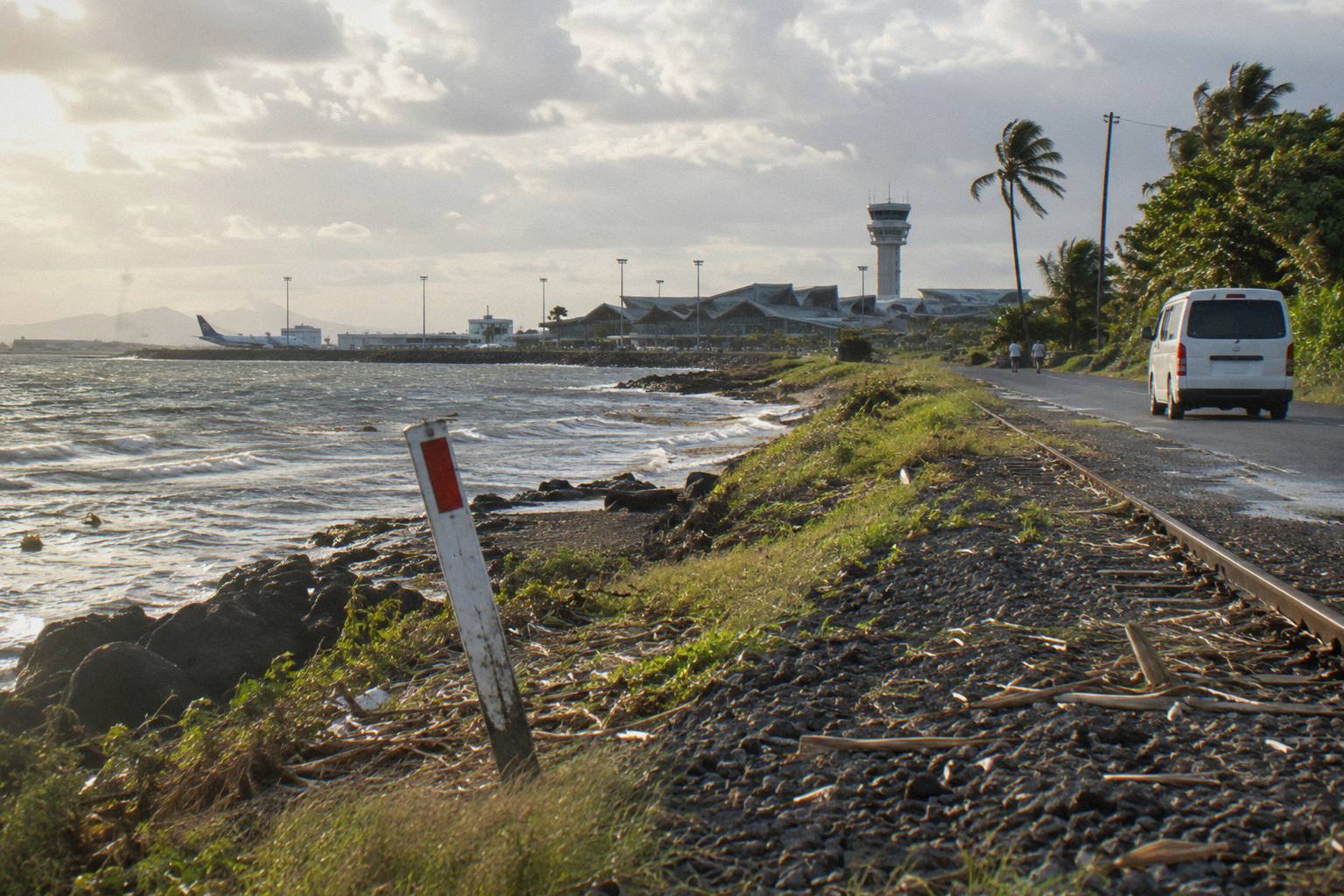
The shared option is a different animal from the private ones. It is the only shared shuttle among the transfer products, rated 4.6 across 115 reviews, covering hotels in Nadi, Port Denarau, Coral Coast, Sonaisali or Lautoka in an air-conditioned car, minivan or coach, with a luggage cap of two pieces per traveller. A solo visitor weighing whether an airport transfer is worth it without a rental car finds the honest trade here: a shuttle trades a private door-to-door run for a greeting that starts the moment the shell lei lands, at a published figure known before departure day.
Safety framing barely differs between the two modes. The shuttle and the private transfers are all pre-booked products with operators whose meeting procedures, luggage rules and cancellation terms appear in writing, and every booking here carries free cancellation for a full refund, with the exact cut-off shown on the booking panel. The choice is about the shape of the arrival, sash greeting versus name board, shared coach versus private car, not about one being governed and the other not.
A shuttle also suits a traveller whose worry is procedural rather than personal. The Rosie meeting arrangement begins with a uniformed representative before any vehicle is involved, so the first human contact at the airport is with a company employee whose role is written in the booking. For anyone anxious about finding the right car in a busy arrivals area, that staged handover, representative first, driver second, removes the matching problem entirely. The luggage cap of two pieces per traveller is published too, and oversized luggage may be restricted, so the operator should be asked first when bags run large.
What Do Nadi Airport Drivers Actually Promise?
Only what their own product page lists, and the honest comparison reads each product's own wording: one Xplore product quotes flight following, the Epic Coral Coast transfer states the driver waits from scheduled arrival until the guest is met, and two products, the Rosie Prado premium transfer and the HotFiji Suva transfer, list day and night, seven days a week. No other product lists operating hours, so late arrivals should book ahead and check the booking panel.
| Transfer | What the operator lists for the meeting |
|---|---|
| Xplore private transfer to any hotel | Arrivals hall, driver with a name board, flight following, meet and greet |
| Uniquely Fiji private transfer | Meet and greet at the arrivals hall, up to 4 passengers per vehicle |
| Rosie shared arrival transfer | A Rosie representative in a sash with a shell lei, then the driver |
| Epic Coral Coast transfer to Shangri-La | Driver waits from scheduled arrival until the guest is met |
| Rosie Prado premium transfer | Shell lei greeting, voucher exchange at the Rosie airport office, open day and night |
The pattern worth noticing is that promises belong to products, not to the industry. The Epic Coral Coast transfer, from US$31.91 per person and rated 5.0 across 108 reviews, states its waiting rule with no time limit added, and it should be read exactly that way. The Xplore Momi Bay transfer's flight line, "Follow up incase of flight details", is its own wording and not a universal delay policy. A safety-minded reader gets further by reading each operator's listed commitments than by assuming any feature travels between bookings.
The same discipline applies to hours. Only two products list operating hours at all, the Rosie Prado premium transfer and the HotFiji Suva transfer, each stating day and night, seven days a week. That fact answers a question nervous night arrivals ask constantly: rather than hoping a driver is available at an unsociable hour, a traveller landing late can look at the listed hours on a product's own page, or book ahead and check the booking panel where no hours are given. No airport transfer product should be assumed to run around the clock simply because an airport does.

Distances play their part in expectations. The drive figures on record are free-flow estimates that real journeys exceed with traffic, flight timing and drop-off sequence: Denarau Island centre sits about 11.0 km and roughly 15 minutes without traffic from the terminal, Nadi town about 6.0 km and roughly 9 minutes, and Suva about 192.4 km and roughly 183 minutes. A passenger who knows the scale of the drive before landing has one less thing to second-guess from the back seat, whatever the mode.
Where A Pre-Booked Driver Beats The Kerbside Decision
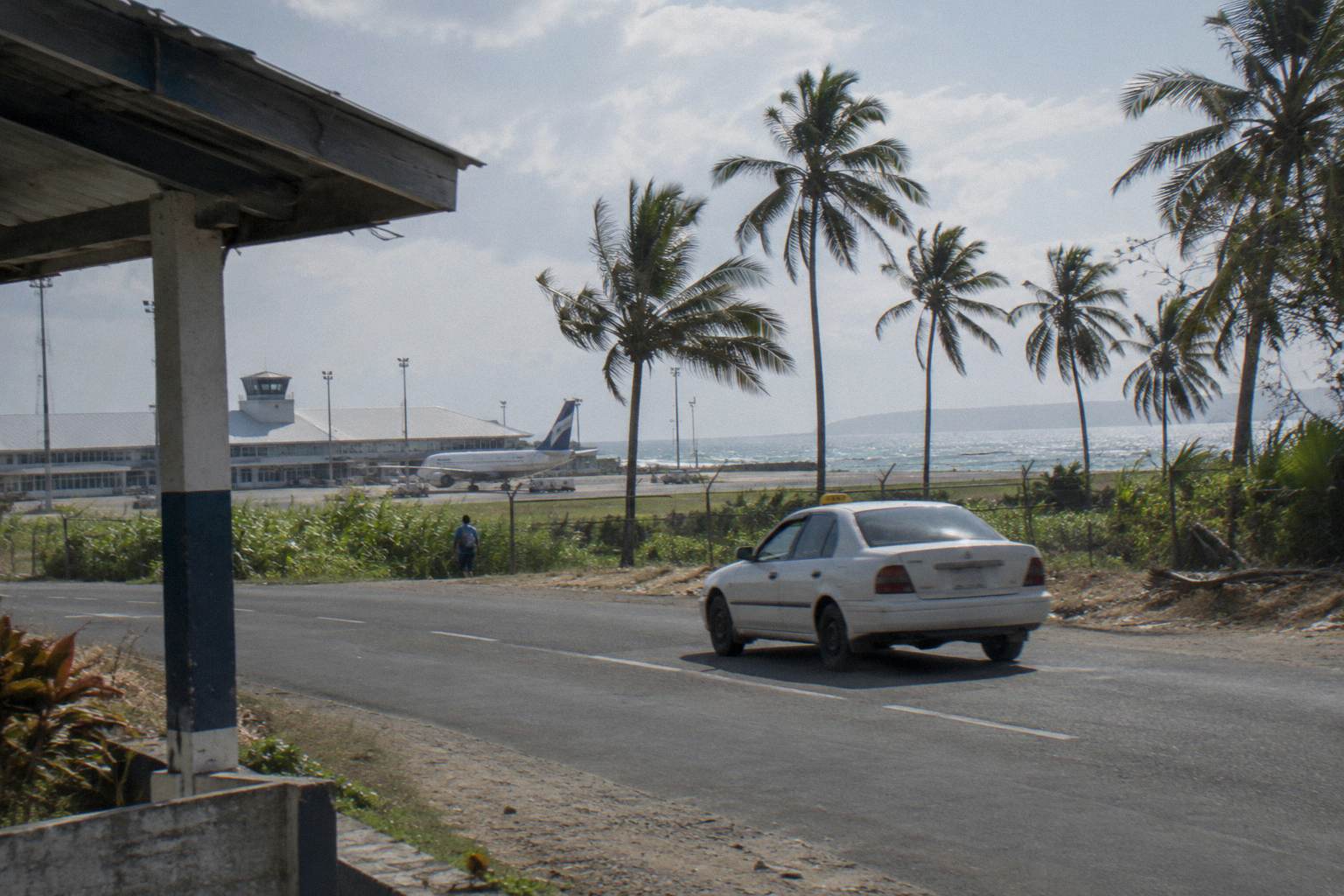
The pre-booked route wins on paperwork rather than heroics: the booking records the operator, the meeting point, the vehicle type where stated, and the cancellation terms before travel, while the walk-up meter ride records only a fare that starts at the listed flag fall and a licence framework that stands behind it. For a nervous flyer, that paper trail is the comfort product.
This is the practical conclusion the official facts support. The licensed airport taxi system at Nadi is approved, metered and complaint-routed, and the transport authority polices the illegal fringe; no verified safety statistics exist beyond that framework, and none are needed to make a reasoned choice. What Nadi Airport Transfer adds to the picture is a set of pre-booked alternatives whose terms are published in advance, from the Xplore any-hotel transfer's name board and flight following to the Uniquely Fiji per-vehicle rate of US$13.59 up to 4 passengers and the Rosie shuttle's sash greeting at US$37.58.
There is a budget layer to the same reassurance. The Bula Taxis VIP private transfer from Nadi Airport to all hotels is listed at US$8.61 per person, covering a hotel of the passenger's choosing in an air-conditioned vehicle, with infant seats available. It carries no rating on its own page, and that is worth saying plainly rather than dressing up. Families have dedicated child-seat options too, described in the guide to Nadi Airport transfers with child seats, where each product's own seat policy is laid out product by product.
Whichever way a traveller leans, the decision belongs at home, on a screen, with the cancellation window open, rather than at the arrivals kerb with bags in hand. Fiji's transport regulators have done their part by publishing the rules; the passenger's part is simply choosing which set of written terms to ride under.
Common Questions About Taxi Safety In Fiji
Is It Safe To Take A Taxi In Fiji?
The official record describes a regulated system: Nadi Airport taxis are owned by individual proprietors with the approval of Airports Fiji Limited, meters are mandatory, and LTA Fiji actively enforces against illegal public service vehicles. No verified safety statistics have been published, so the reasoned answer rests on that framework and on pre-booking a named driver where certainty matters.
Are The Taxis At Nadi Airport Licensed?
Yes. Airports Fiji's taxi page states the airport taxis are owned and operated by individual proprietors with the approval of Airports Fiji Limited, and that meter use is mandatory for all journeys, with complaints handled by Airports Fiji customer services.
Do Nadi Airport Taxis Use Meters?
Meters are mandatory for all journeys from Nadi International Airport, and the listed flag fall for a journey out of the airport is FJ$5, per Airports Fiji's taxi page.
What Is The Safest Way To Get From Nadi Airport To A Hotel?
Both the metered airport taxi and a pre-booked transfer sit inside the regulated system. A pre-booked product adds written terms before travel, such as the Xplore private transfer's arrivals-hall name board and flight following, listed from US$9.06 per person with free cancellation for a full refund, with the exact cut-off shown on the booking panel.
Who Handles Complaints About A Nadi Airport Taxi?
Airports Fiji customer services is the published complaints route for airport taxi issues, and the Land Transport Authority enforces against illegal PSV operations nationally.
Do Pre-Booked Nadi Airport Transfers Allow Cancellation?
Every transfer product here is listed with free cancellation for a full refund, which makes an advance booking reversible if plans change.